

Secondhand for all: How this thrift shop is keeping circular fashion affordable in Chicago
Mireya Fouché of Monarch Thrift Shop on redefining what community-centered secondhand ecosystems can look like

Secondhand fashion has been on a meteoric rise in recent years — a boon for the circular economy and proof that sustainable solutions can become mainstream.
As with any industry, though, expansion comes with growing pains. While the secondhand boom has had many positive effects, the affordability of merchandise and lack of transparency around unsold clothing are two rising concerns.
The influx of fast fashion has only complicated things further — driving up processing costs, reducing overall quality, and leaving many thrift stores with more product than they can move through their doors. So it's worth asking:
Who gets to thrift? What happens when entire communities are priced out of secondhand? And who’s being held accountable for where unsold donated garments end up?
Mireya Fouché has been asking these questions since before they were trending. As co-founder of Monarch Thrift Shop, a woman-founded independent nonprofit based in Chicago’s Avondale neighborhood, she has spent over a decade building a model that puts community, affordability, and sustainability at the center.
For Mireya, a first-generation Mexican-American who experienced housing instability before going on to earn her MBA from Loyola University Chicago’s highly selective Baumhart Scholars program, equity and empathy are personal.
When I first met Mireya, it was clear she was committed to doing things differently. This conversation felt less like an interview and more like a masterclass in what it looks like to run an organization with real integrity. Mireya Fouché is one of those rare people with sharp business acumen and a soul for community — and Monarch Thrift Shop is the kind of model the entire industry can learn from.
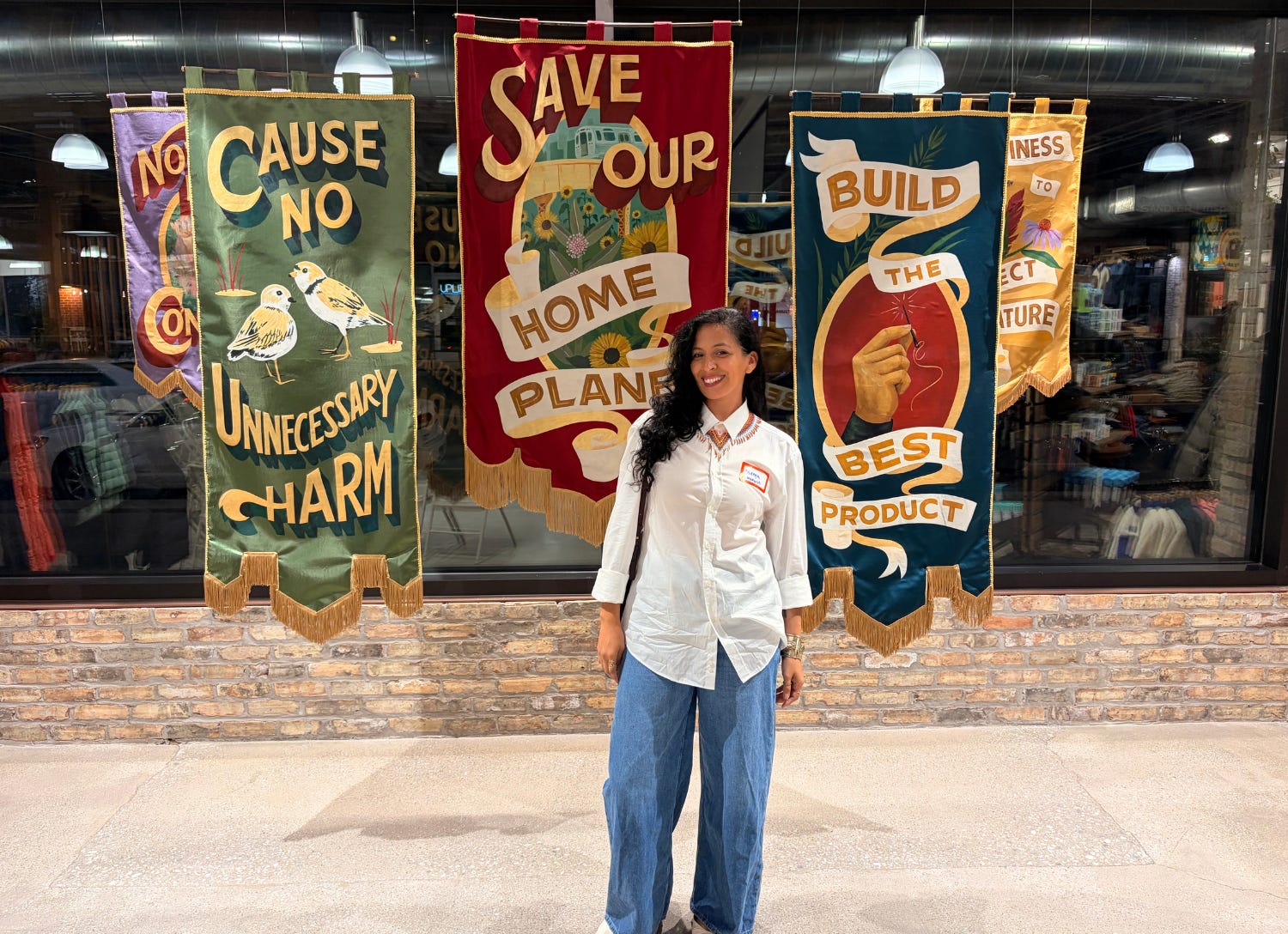
This interview has been condensed and lightly edited for clarity.
What sparked the idea for Monarch Thrift Shop, and what did that journey to co-founding it actually look like?
We are approaching our 11th year in business as a woman-founded, independent, nonprofit thrift store — which is a huge milestone.
It goes back to 2014, when a former coworker approached me about starting a social enterprise to support an organization providing job opportunities for men coming out of survival prostitution. My background is in apparel manufacturing, retail, and merchandising, so I understood immediately what was possible. I also firmly believe that sustainable organizations have to create their own revenue streams — ones that aren’t reliant on grants and fundraising alone.
From the start, we wanted everything to mean something — even the name. The vision was to build people up and send them on their way, so the Monarch butterfly felt right. We didn’t even have a brick and mortar yet. We sorted donations in a storage unit, rented U-Haul vans, and picked up clothes throughout the city until we found our location in the Avondale community in Chicago.
A few years later, around 2018, the organization that originally started us went in a different direction, so we parted ways. We had to figure out how to recreate a financially sustainable business model while continuing to provide job training opportunities and be a place of community and support.
Then 2020 happened. We had to close our brick and mortar and shifted into e-commerce and visual merchandising sales — we merchandised our storefront windows so people could text to buy, and we’d pack it up for curbside delivery. That innovation and creativity really helped boost Monarch as a standalone nonprofit.
By 2022, we needed a larger space and moved across the street, going from 2,500 to 4,000 square feet. We leaned further into being a job training site with a focus on individuals facing barriers to employment, partnering with the Avondale Restorative Justice Court, local high schools, and organizations like Greater West Town. Now we operate on two platforms: a program platform and a sustainability focus.
A Time Out Chicago piece mentioned Monarch kept 50,000 pounds of clothing out of landfills in 2023. What has had the biggest impact?
For us, what’s been most impactful is our pricing model — specifically providing lower price points that protect affordability and accessibility. The secondhand resale market is trending fast and is projected to become a $350 billion-dollar industry by 2027, and with that, it continues to price out people who need it.
We have actually lowered our prices from where we started in 2015 to where we are now, which is interesting because most businesses raise prices over time.
When I look at large organizations like Goodwill, they’re highlighting how their sales revenue has gone up — but they’re not telling us how many units they’ve sold. From a secondhand retail perspective, it’s important to price products in a way that increases revenue, but I also look at the quantity of units sold.
If revenue goes up but units sold go down, that’s a disconnect. It means fewer products are reaching consumers and more are going into landfills or to textile recyclers who may shred items that could have been used by someone who just needs a t-shirt.
It took us eight years to find the sweet spot for our pricing. We’ve reached it, and it’s kept us recognized as the most affordable thrift store — one that promotes accessibility so consumers can actually shop here. If you can get your product into the hands of people, it’s not getting into landfills.
What the person does once they purchase it, of course we have no control over. But holding ourselves accountable as a nonprofit thrift store means ensuring our product is priced well enough to meet our bottom line while still getting it to consumers.
You mention accountability and that you hold yourself accountable — because responsibility is ingrained in your mission.
Thinking about the broader secondhand system, what do you feel would be helpful in ensuring transparency and accountability in a time that consumers are increasingly distrustful of where donated clothes end up?
I’ll speak to a small scale first, and then the larger scale.
From a small-scale perspective, what data has shown — and this is internal data from neighboring thrift stores — is that it starts with identifying whether they have a system in place for offsetting items that aren’t selling.
Step one is asking the question, step two is identifying the gap, and step three is working together as a community to move product.
There’s no shortage of product; there’s an abundance. What’s the overage at the end of the quarter?
I think the best way to approach this is anonymously at first, because it’s not that businesses don’t want to be held accountable — it’s that they don’t want to lose sales or traffic. They still have to be sustainable. But they may also need a solution.
If we can identify the overage that local small businesses have, we can help connect them with organizations that need those products and find nonprofits that can utilize them. That’s the work we do here from a sustainability perspective.
At a larger scale — using Goodwill as an example because the data is out there — the prices are going up and many executives at regional Goodwill organizations are making several six figures.
Increasing price points for fear of resellers is not only boxing out people who need affordable clothing, like seniors on a fixed income, it’s also creating an overage of products that aren’t being used. I understand the pressure larger organizations face to make these choices, though I don’t personally agree with it.
The solution I see for larger players would be a more humanistic, community-centric approach — asking who needs what and how can we provide that, and holding themselves accountable for not doing price hikes every few months. Because what that ends up doing is minimizing the number of quality units being moved, which in turn end up in landfills.
For us as a nonprofit, transparency isn’t just something we’re ethically committed to — it’s something we’re legally required to abide by as a 501(c)(3). And it has helped bring in more consistent donors.
We’re honest about saying: back then we didn’t know this was a problem. Now we recognize we’re part of the problem, and we’re being intentional about finding a solution.
I think small businesses may need to feel that sufficient solutions exist before they feel comfortable getting to that point of transparency.
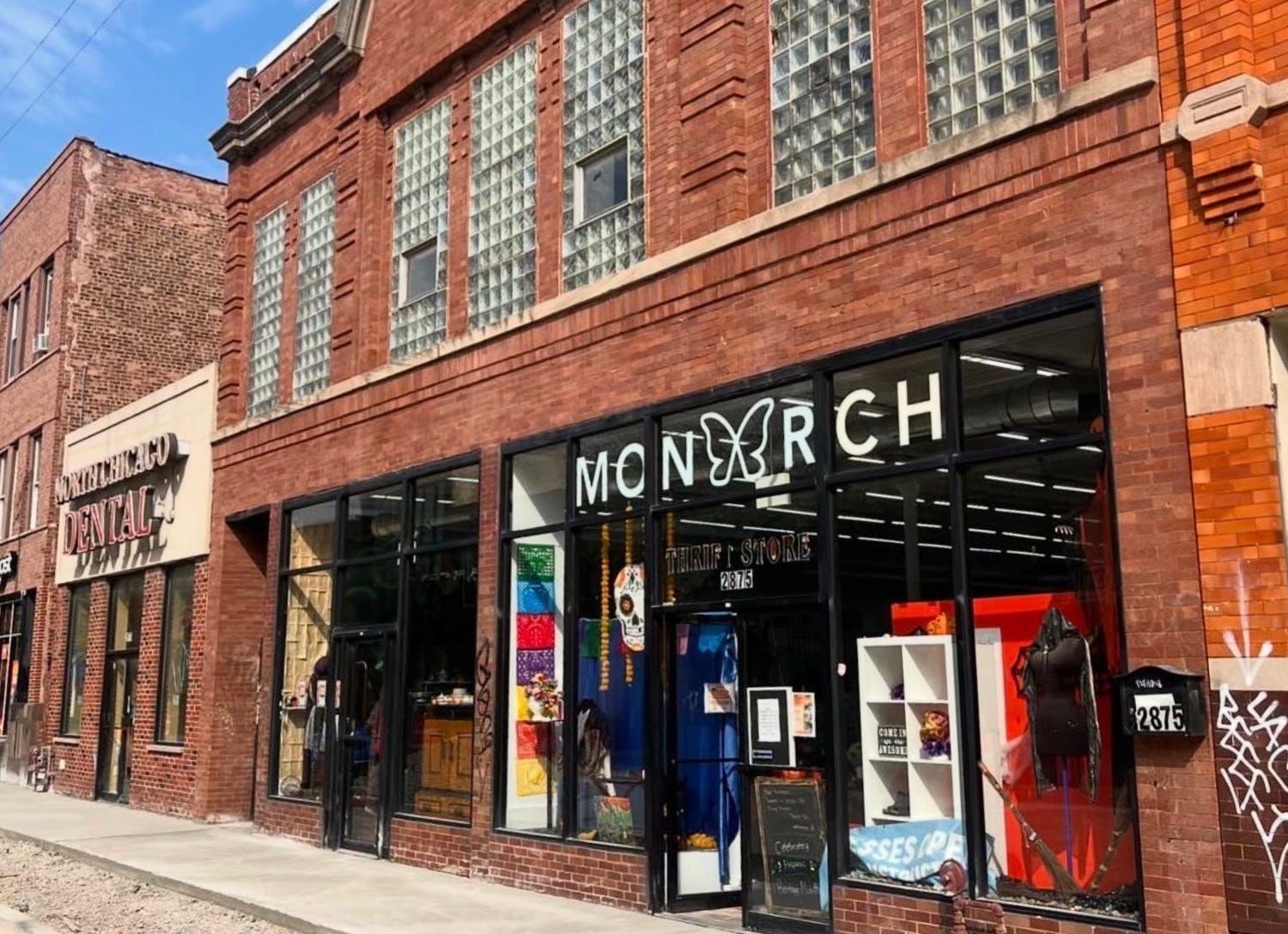
Can you tell us more about the affordability survey you conducted with your community?
How do you ensure lower-priced products reach those who need them without necessarily turning away other customers?
I’ll start with the data. We continue to build on this research, and the more I read the results, the more interesting it gets — I’m a very data-centric person. The approach was to have actual thrifters tell us from their perspective whether prices are becoming less accessible — not just to themselves, but to lower-income individuals who need affordable options.
We did ask about income, and what was striking is that even higher-income respondents were doing the math and saying,
“I can afford this, but I don’t see how someone making $20,000 a year with three kids can clothe their family while also paying their bills.”
Those economic realities are embedded throughout the survey.
What we’re hearing from consumers in neighborhoods like Avondale, Logan Square, and Wicker Park is: “I don’t even mess with that area anymore because it’s trendy and overpriced.”
That’s critical data if you’re considering opening a thrift store — if you position yourself in the wrong location, consumers have already written that neighborhood off as a priced-out space.
We’re in Avondale, and I keep a close eye on this because Avondale is starting to appear on that list, and that makes me uncomfortable. We’ve been here since 2015, and we’re known as the affordable place. I’d love for our neighbors to continue holding that value, but ultimately businesses will make their own decisions — and if they don’t, the consumers will make the decision for them.
As for how we keep prices accessible while managing the full range of donations: our store is 3,000 square feet of selling floor. Within that, I’ve allocated 300 square feet to what I call “Monarch Luxe.”
It has its own logo, its own layout — the green room, very lush and curated. Higher-priced items go in there to minimize price shock for consumers who are looking for a $9 purse, not a $200 Coach bag.
I learned over time that transparency brings in high-ticket donations, and I needed a place to house them that wouldn’t scare off our everyday shoppers. When customers would see a $40 shirt in the middle of $7 shirts and ask “is this price right?”, you get enough of those questions and you realize you need to pivot.
We’re two years into this pilot section and it’s a healthy part of our bottom line — but it doesn’t price out consumers who can’t afford curated spaces.
The Monarch Luxe section becomes people’s “treat themselves” spot — for a birthday, Christmas, a self-care day. On a regular day, they shop on the main floor, where prices range from $7 to $10. Our base floor barely goes up to $15, and that price is reserved for gala gowns and cocktail dresses.
What I love about our customer base is that when someone who could afford the $200 purse comes to the register and sees how affordable it is, it opens up a conversation. We get to say: we know it’s affordable, and part of our mission is to preserve affordability in the thrift industry.
That often leads to them making a financial donation — and that donation is what helps us continue to sell items at $5, $7, and $10.
We’ve created a world where these different income levels still work together in a way that supports each other. I’m not entirely sure how it happens, but it works.
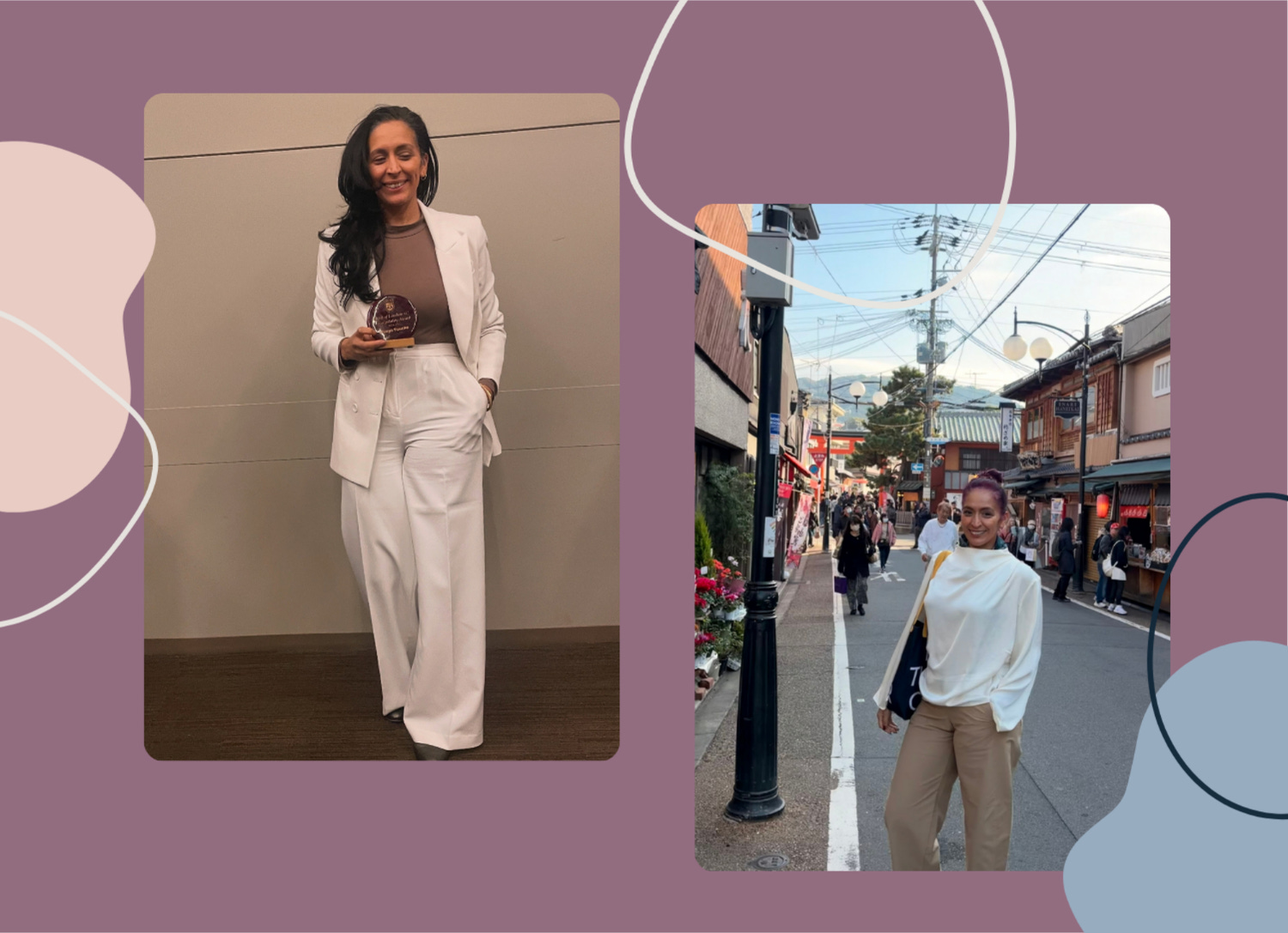
There’s been an influx of fast fashion in the secondhand market. What’s your experience at Monarch, and what would you advise people when it comes to donating fast fashion?
There has been an increase in fast fashion coming through our doors, but for Monarch it’s still a small percentage of our product.
We do not suggest that people stop donating fast fashion. If you don’t give it to a thrift store, what are you going to do with it? Unless you’re personally planning to upcycle it or take it to a swap, bring it to a place that will take care of it.
Being a socially conscious consumer comes with a level of privilege. A good majority of our customers do not have the privilege to be socially conscious in that way — shopping at Monarch is their socially conscious choice. They still need a $5 shirt, a $7 dress, a $7 blazer to wear to a job interview. We would never turn away fast fashion donations because our consumers still need it.
What we do is run a “Fast Fashion Focus” three times a year, where all fast fashion brands in the store are priced at $1 a piece. This plays on the affordability angle — if you can get it at Shein for $12 but it’s $15 resale, that’s a major disconnect.
Our version flips it: it's actually cheaper at Monarch. And it brings in fashion design students who need fabric and are learning to upcycle. You’d be surprised what they create with a dollar’s worth of fast fashion.
Of course polyester isn’t great — but what’s the alternative besides tossing it? Please, just don’t put it in the trash. Bring it here.
We’ll figure it out and find a home for it.
How can readers get involved and support Monarch?
First, connect with our new Instagram page. Back in December, our business page was deactivated — we still don’t know why — and we lost all our followers and content. Any way readers can show us love on socials is helpful.
Second, I personally travel for sustainability research, and I would love to connect with individuals from different cities or countries who are interested in learning about our business model or sharing what they’re doing in their communities. A lot of what we’ve started implementing here in Avondale was inspired by research I’ve done in places like Copenhagen. Having that open line of communication strengthens the sustainability network. Reach out.
Third, if you’re in the Chicago area — shop at Monarch or sign up to volunteer. We are a highly volunteer-run organization. At the end of the day, our bottom line needs to be healthy so we can continue to provide affordable products and hands-on job training. We need sales, and we need volunteers.
Read This Next:


Thanks for being here — putting these letters together each week is a highlight of my week. If you’ve been finding value in Slow Fashion Saturday, here are a few simple ways to support it:
💚 Heart this post or leave a comment. I love hearing your perspectives.
📬 Share this newsletter. Repost on Substack or forward it on to a friend.
🌸 Upgrade to a paid subscription. Not only does it help this newsletter grow into an even better resource, but you’ll get access to exclusive content and materials, plus the ability to ask your questions and suggest future topics.If you’re new here: welcome! Subscribe below to get Slow Fashion Saturday in your inbox each week. 💌
What a great, inspiring story, thank you!!
Thank your for giving a fellow Latina a chance to shine and show this amazing business. I can’t wait to go to Chicago and visit this store. But she also said a lot of eye opening things about the thrift industry. Thank you for you this!